
.png)
More Than a Hashtag: Living Mental Health Awareness Daily
- Lois Baynham

- Oct 22, 2025
- 5 min read
Every day, the world reminds us to care about causes, awareness months, and mental health days, yet somehow, we still forget to care consistently. This piece challenges the performative rhythm of awareness culture, the irony of celebrating self-care before the most stressful time of year, and asks: What if every day were World Mental Health Day?

The Overload of Awareness
Every month is an awareness month for something, often multiple things. This month alone, October, is ADHD Awareness, Breast Cancer Awareness, Disability Employment Awareness, AIDS Awareness, Depression and Anxiety Awareness months, as well as World Mental Health Day and World Sight Day, and you get the picture. The number of causes, days, and differences that we need to keep track of, raise awareness for, and respond to has become overwhelming and seemingly never-ending. This is compounded by the flashpoint of resentment and pushback from those who aren’t labelled as different enough to merit their own day or month.

The Privilege of “Getting on With It”: Cause collectives and the Divide
Let’s take a step back for a moment and consider why we need so many reminders about groups and causes that many people don’t give a second thought to, except to complain about during [ENTER AWARENESS CAUSE & MONTH]. You hear whispers from the privileged about how they just have to get up and get on with things despite their troubles, that they don’t have the “privilege” to sit and complain about life or have a month highlighting their struggles (completely missing the point, of course).
It’s precisely this kind of attitude that stirs the emotions of the marginalised and what I call “cause collectives.” Each sits on their side of the divide, imploring others to pause long enough to understand how our systems and cultural practices create exclusion and othering rather than belonging and common ground. At a time when humanity should be beyond misinformation and dark-age thinking, as we embrace global advances in science and technology, we instead bury our heads in the collective sand of ignorance, blocking our ears to drown out the noise of “other people’s problems.”
Echoes of Pandemic Humanity
Who can blame them/us? This generation is softer and prefers winning participation trophies over doing a hard day's work. All of these minorities just want an easy path and special treatment to get ahead….Any other tropes I can add here?... Millennials killed the workplace? You can’t say anything in the workplace these days without offending someone… and here we arrive at D&I—the new DEIB. Gone is the E for Equity, as it's an abstract concept that confuses people since it doesn’t mean Equality. God forbid we have both, and don’t treat each other like we’re too stupid to understand the difference. Also gone is the belonging. We caught it for a moment during the pandemic, and realised how essential each of us is to the processes and systems that keep the world moving. Some of us were cast aside, our previously essential roles became irrelevant in a remote world, and we were benched for a while. During this time, many people reconnected with themselves, their families, or friends and reprioritised what is truly important.

Back to Business, Back to the Office (and Back to Burnout)
We loved, lost, and sacrificed as one world, united by a common enemy. Even those who rejected science benefited from the collective response that brought the virus under control. But that glimmer of humanity has faded. The economy, politics, high expectations with low resources, and productivity demands have all flooded back through return-to-office mandates, layoffs by a thousand paper cuts, endless meetings, late nights, and social gatherings to prove culture fit. Promotions are rare, and cost-cutting means generic training replaces real development. It’s exhausting, and not just for the neurodivergent, who often struggle with change, but for everyone.

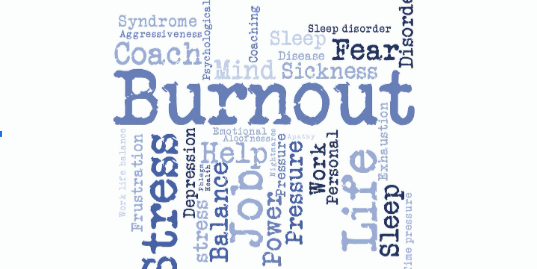
It’s exhausting for every community: for the people who can’t afford to live near their workplace and sacrifice hours commuting for a sustainable life; for mothers who miss irreplaceable time with their children; for disabled people navigating systems never designed for them; for lower-income employees spending half their wages just getting to work. Because so many sacrifice so much to participate in our cities;to serve, sell, process, feed, and entertain. It’s on us to create places where people want to work, live, and create, and where everyone has access.
Every Day Should Be World Mental Health Day
I might seem on a tangent, so let me tie this together. I recently recorded a podcast about why every day should be World Mental Health Awareness Day.
We all pause for awareness days, wave a flag, share a post, and offer (un)helpful tips about avoiding burnout. But the message rarely lands. It feels like another box to tick for companies and comms teams. Meanwhile, employees are burning out, unmotivated, fearful of what’s ahead, supposedly being recognised but never feeling more invisible. So why wait for awareness days? Why give lip service once a quarter? Why isn’t every day awareness day?
The Holiday Whiplash
I’m particularly annoyed about the timing of World Mental Health Day, right before the most stressful time of the year. We wave our pompoms, talk about rest, breaks, and “no-meeting Fridays,” and then march into a season defined by pressure, performance reviews, holidays, and financial strain. The same systems encouraging self-care simultaneously push people into year-end burnout.

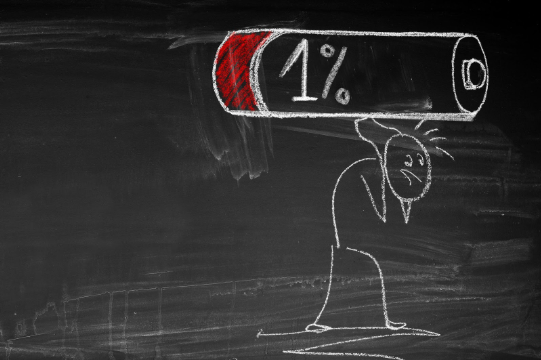
The real mental health cost appears after the festivities end. When the credit card bills arrive for the money spent to meet expectations or create momentary joy. When layoffs and restructures hit as companies prepare for Q1. When relationships held together “for the holidays” unravel, as divorce and separation rates spike from January to March. When hospital admissions for mood and behavioural disorders climb through the winter months, especially among the young.
From Awareness To Responsibility
These patterns show how society celebrates awareness but neglects wellbeing. We surface issues for a day, then bury the consequences for months. The pressure to be grateful, joyous, and social from October to December collides with the reality of anxiety, isolation, and fatigue. Instead of setting boundaries and practicing self-care, many suppress distress to avoid “ruining the holidays,” only to face emotional fallout in the new year, compounded by failed resolutions and renewed self-criticism.
Awareness without sustained compassion is performance. Real mental health awareness isn’t a calendar event or an uplifting keynote from someone who has overcome the odds. It’s a cultural responsibility, one that requires daily curiosity, grace, and flexibility in our workplaces, homes, and communities. Let’s move beyond lip service and create a world that consistently promotes mental wellness for everyone, or at least as many as we can.
~ Lois



Comments